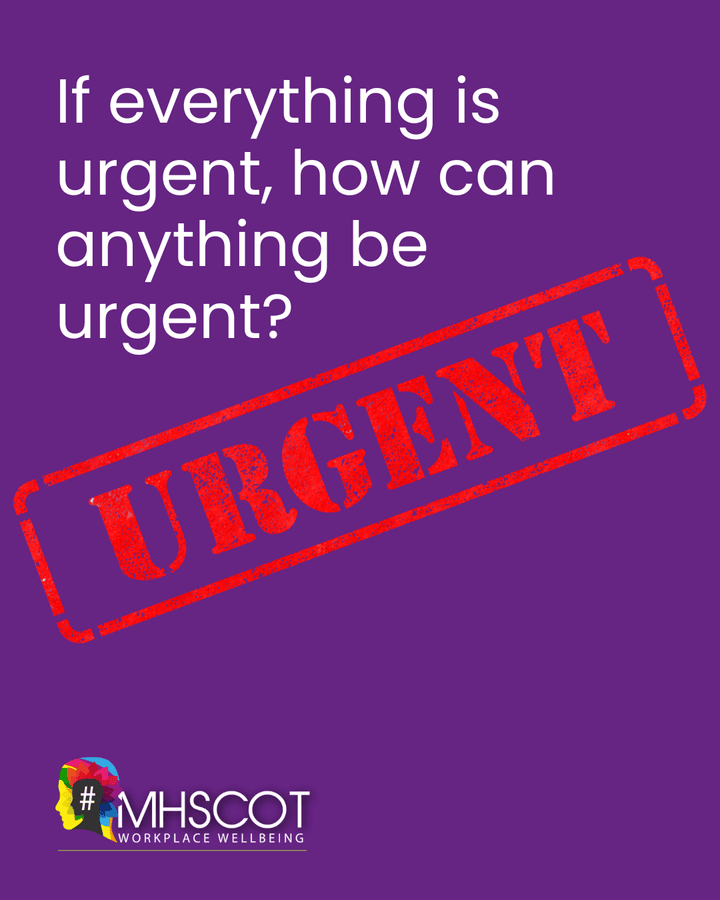
There's a word that's lost its meaning in most workplaces: "urgent."
Started by Amanda Opie
350 points
Amanda Opie


It's stamped on nearly every email, every Slack message, every request. And when everything carries that label, we're left with no way to tell what actually matters right now.
The result isn't faster work. It's a workforce stuck in low-grade alarm mode:
• People can't distinguish real priorities from noise
• Constant "urgent" flags train everyone to either panic or zone out
• Neither response leads to good decisions
This is worth naming for what it is: manufactured urgency, and it's quietly corrosive. It doesn't just slow things down, it erodes trust. When "urgent" stops meaning "urgent," people stop believing the label at all.
The fix isn't a policy on email subject lines. It's leadership modelling restraint, protecting the word "urgent" so it still carries weight when something genuinely can't wait, and building enough planning and trust into the system that most things don't need to be labelled at all.
Clarity beats urgency. Every time.
How does your workplace handle this? Is "urgent" still a meaningful word where you work, or has it lost its power?

350 points
Amanda Opie
It's stamped on nearly every email, every Slack message, every request. And when everything carries that label, we're left with no way to tell what actually matters right now.
The result isn't faster work. It's a workforce stuck in low-grade alarm mode:
• People can't distinguish real priorities from noise
• Constant "urgent" flags train everyone to either panic or zone out
• Neither response leads to good decisions
This is worth naming for what it is: manufactured urgency, and it's quietly corrosive. It doesn't just slow things down, it erodes trust. When "urgent" stops meaning "urgent," people stop believing the label at all.
The fix isn't a policy on email subject lines. It's leadership modelling restraint, protecting the word "urgent" so it still carries weight when something genuinely can't wait, and building enough planning and trust into the system that most things don't need to be labelled at all.
Clarity beats urgency. Every time.
How does your workplace handle this? Is "urgent" still a meaningful word where you work, or has it lost its power?