Beyond Burnout: Four Truths About the UK's Work Alarming Stress Crisis
3 minute read
There’s a quiet, persistent tiredness running through today’s workplaces. Many people feel stretched, pressured, and overloaded - and we’ve almost come to accept it as part of modern working life. We talk about burnout as though it’s a personal challenge, something individuals just need to “manage better.”
But the evidence from the Health and Safety Executive’s
Work-related stress,
depression or anxiety
statistics in Great Britain,
2025 tells a
very different story.
A seven-year analysis of data from Great Britain shows that work-related stress, depression, and anxiety are not simply personal struggles. They are measurable, widespread organisational risks - and they’ve now reached a level we can no longer ignore.
This blog highlights four key truths every leader, HR professional, and organisation needs to understand. These insights challenge common assumptions and show why we must rethink the way work is designed and supported.
1. We’ve Passed a Breaking Point - and We’re Not Going Back to “Normal”
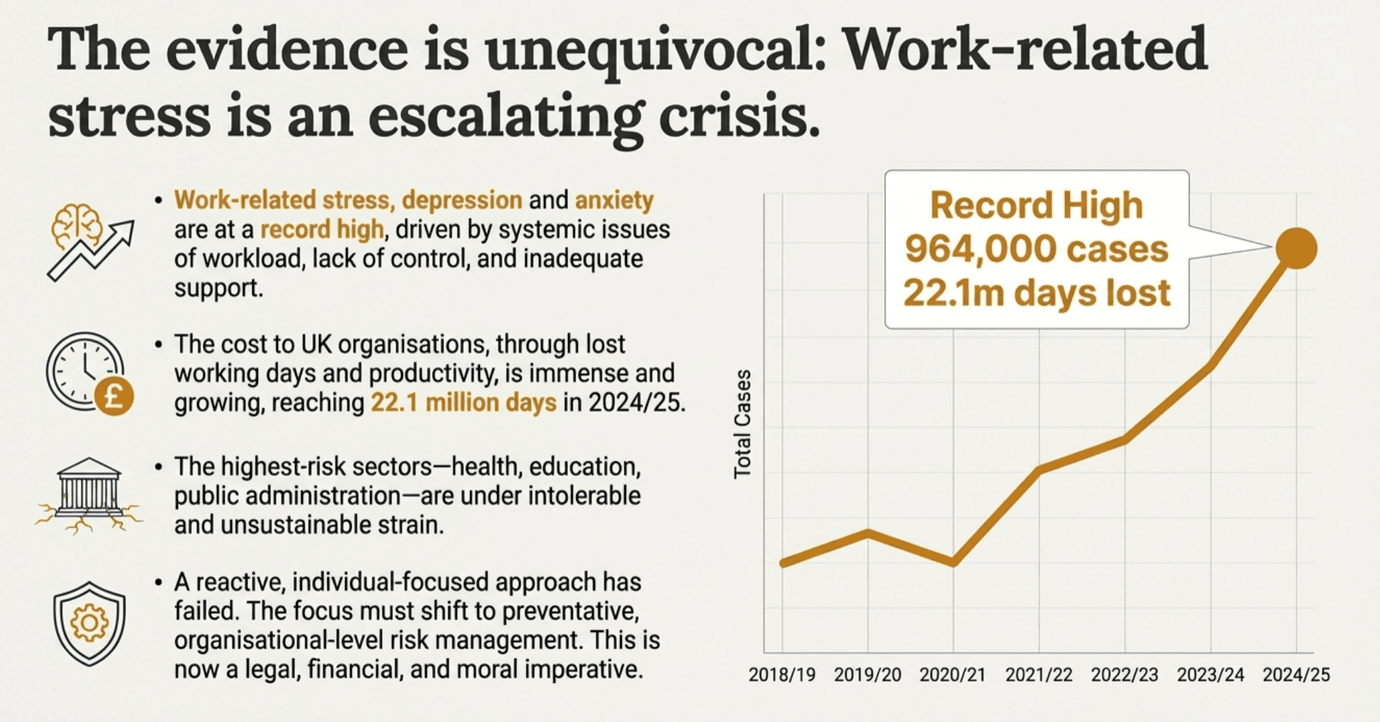
The latest 2024/25 figures show the highest levels of work-related stress ever recorded. This is not a short-term fluctuation. It’s a long-term shift in how people are experiencing work.
A few headline figures:
- There were 964,000 cases of work-related stress, depression, or anxiety in 2024/25 - a 60% increase since 2018/19.
- 22.1 million working days were lost last year due to these conditions — 73% more than in 2018/19.
- Each person affected lost an average of 22.9 working days, the highest level yet.
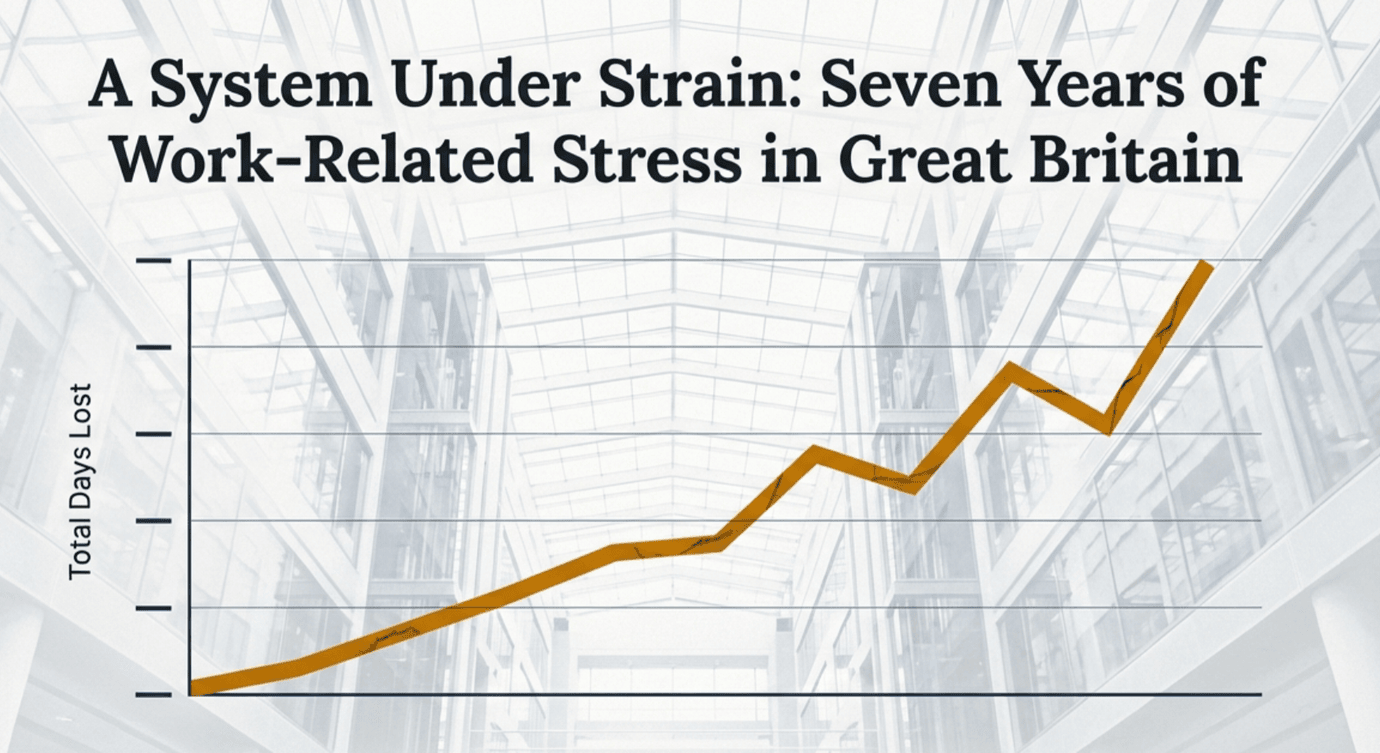
These numbers show a clear pattern: the pressures people face at work are growing, and the effects are lasting longer. This isn’t a temporary post-pandemic spike. It is the new reality unless we intervene.
We cannot rely on things simply “returning to normal.”
2. This Isn’t Just a Wellbeing Issue - It’s a Core Operational Risk
For years, many organisations have responded to rising stress levels with individual-focused wellbeing solutions: apps, wellbeing days, workshops, and more. These can be helpful, but on their own they don’t address the root causes.
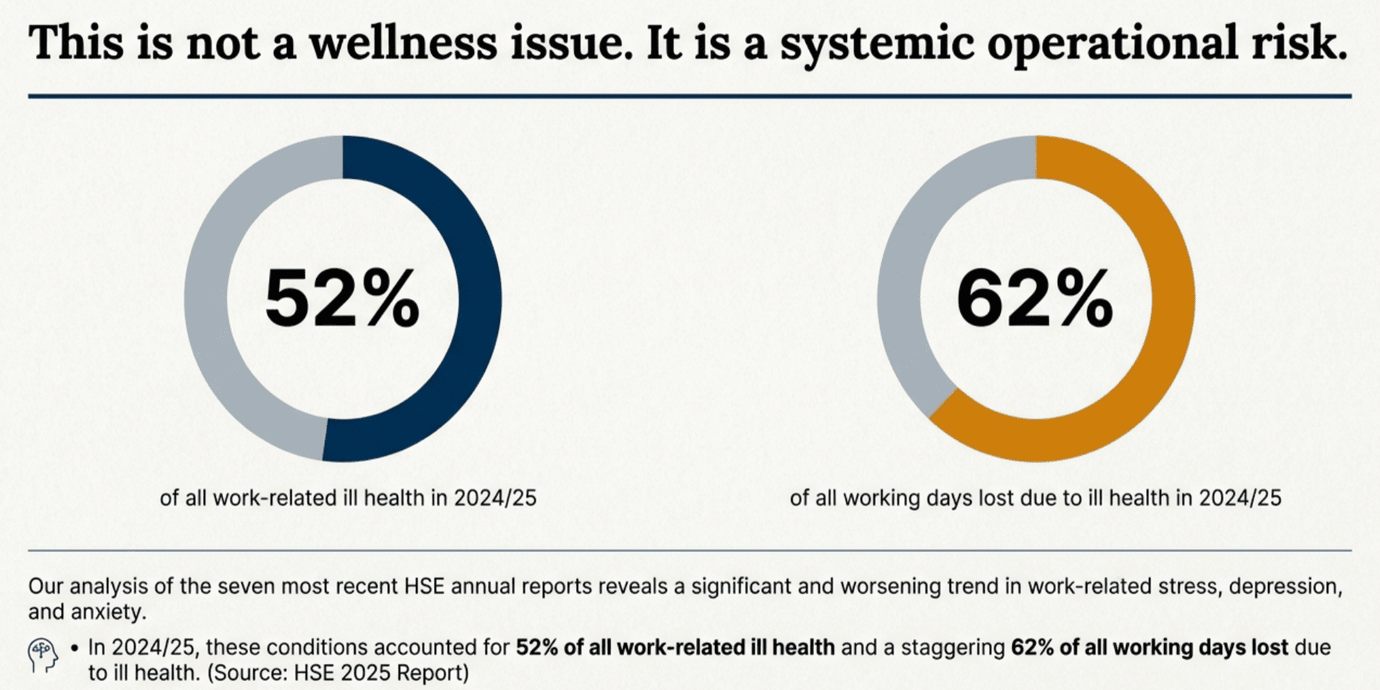
The data shows that work-related stress, depression, and anxiety now account for:
- 52% of all work-related ill health
- 62% of all working days lost
When one category of ill health accounts for the majority of absence, it becomes a business-critical issue. The impact spans every area of organisational performance:
- Operational risk: Productivity drops, deadlines slip, and team capacity shrinks.
- Talent risk: High pressure contributes to turnover, especially in already-stretched sectors.
- Legal risk: Employers have a duty to manage known psychosocial risks — and regulators expect to see action.
This is not a personal wellbeing problem. It is an organisational health problem.
3. The Pressure Isn’t Random - It’s Predictable
This crisis is not affecting everyone equally. The data repeatedly shows that certain groups and workplaces carry far heavier loads than others.
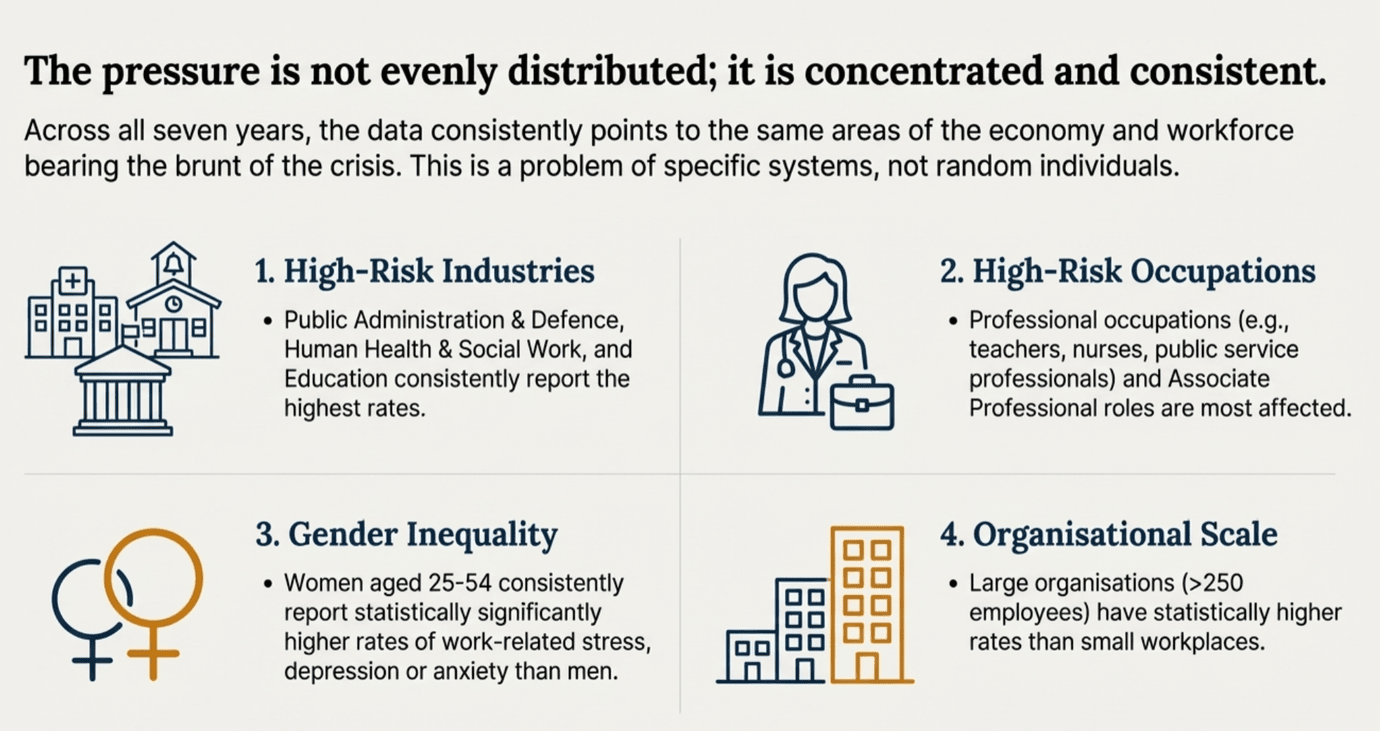
Four clear patterns emerge:
- High-pressure sectors such as Education, Health & Social Care, and Public Administration show consistently elevated rates.
- Professional roles including teachers, nurses, social workers, and other frontline professions - are most affected.
- Women consistently report higher rates of work-related stress than men.
- Large organisations (250+ employees) experience significantly higher levels than smaller ones.
This predictability tells us something important: the issue isn’t about individuals struggling - it’s about systems and structures putting sustained pressure on certain people and roles.
The HSE continues to identify three leading drivers:
- Excessive workloads
- Insufficient managerial support
- Poorly managed organisational change
These are all things organisations can influence.
4. We’re
Trying to Solve the Wrong Problem
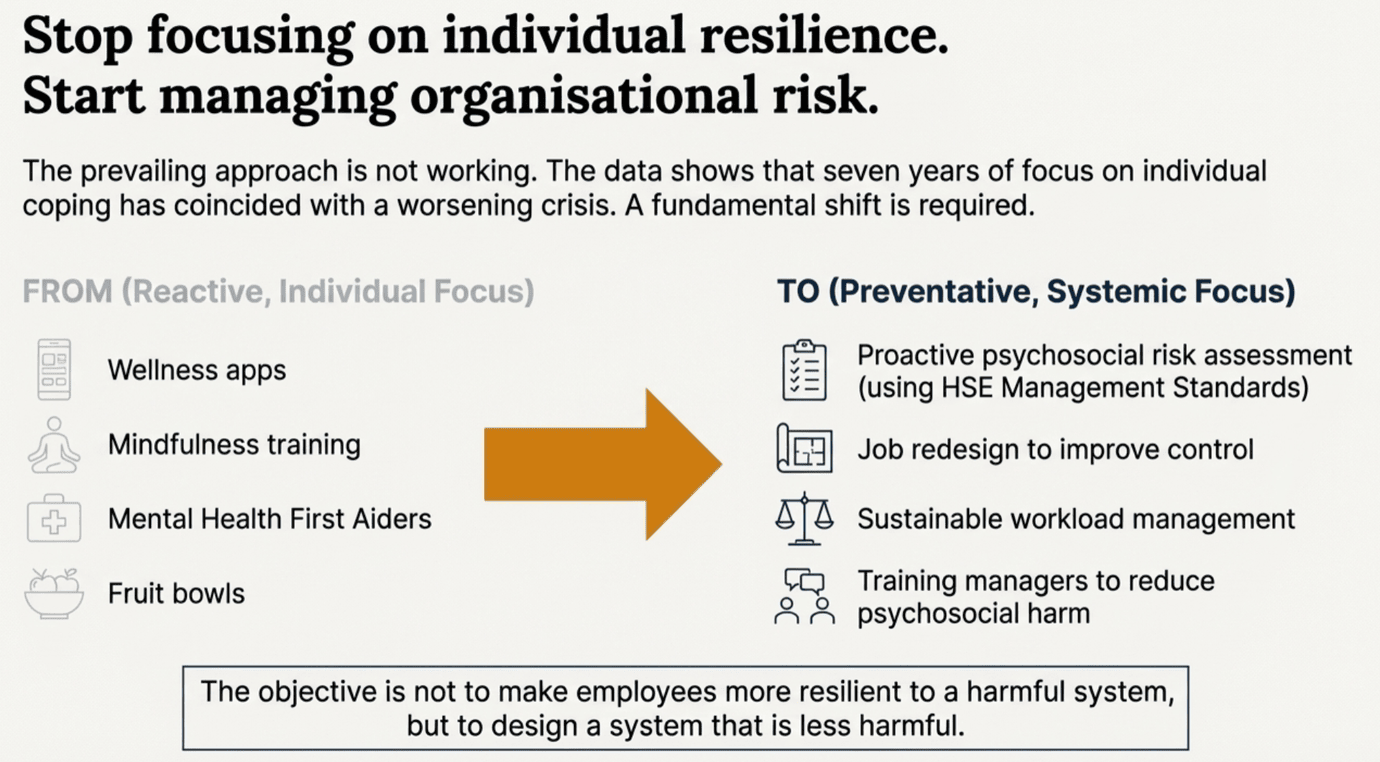
For too long, the dominant approach has been to help individuals cope better. And while skills like resilience, self-care, and early support (including the important role of Mental Health First Aiders) are valuable, they cannot fix structural pressures.
The data shows that focusing solely on the individual hasn’t improved the situation - because the root causes sit within the work itself.
A more effective approach is needed — one that shifts from reactive support to preventative design:
The old approach:
Supporting individuals once they’re already overwhelmed.
The new approach:
Redesigning work environments to prevent harmful stress in the first place.
This includes:
- Proactive psychosocial risk assessments
- Sustainable workload and job design
- Clear expectations and manageable demands
- Managers trained to identify and mitigate pressure early
The aim isn’t to help people “tough it out.” It’s to create workplaces where unnecessary stress simply doesn’t build in the first place.
Conclusion:
Fix the Work, Not the Worker
The data tells a clear story: work-related stress in Great Britain is a growing, long-term challenge rooted in how work is structured and managed. It is not a passing trend, and it is not something individuals can solve alone.
To make meaningful change, organisations need to shift from reactive support to proactive prevention. That means focusing on three immediate priorities:
- Measure the real risks: Use tools like the HSE Management Standards to identify where pressure is coming from.
- Redesign work systems: Review workloads, resources, responsibilities, and processes to create healthier ways of working.
- Equip managers: Give leaders the skills and confidence to spot early warning signs, create supportive environments, and manage demands fairly.
These aren’t “nice-to-haves” anymore. They are essential steps for building workplaces where people can thrive — and where organisations can perform at their best.
With everything we now know about work-related
stress, the question becomes:
How will we redesign work for a healthier future?
Written by: A Opie
Data Source: Health and Safety Executive’s Work-related stress,depression or anxiety statistics in Great Britain, 2025